Get Help Fast, Most inspections scheduled within days

MVOC Testing

MVOC Testing for Mold and Indoor Air Quality Concerns

Persistent musty odors can point to a moisture or microbial problem, even when mold is not visible. Microbial volatile organic compounds (MVOCs) are airborne chemicals that can be released by mold and other microorganisms. Our MVOC testing services help investigate odor concerns in homes and commercial properties, with results evaluated alongside inspection findings to guide the next steps.

Certified • Fast Scheduling • No Obligation
⭐ 4.9 Average Rating
Fast Scheduling
500+ Homes Treated
Certified & Insured

Musty Odors Can Signal a Hidden Mold Problem

Persistent odors may be linked to microbial activity, even when mold is not visible. MVOC testing helps investigate airborne compounds associated with these odors and adds context to your indoor air assessment.

Why MVOC Testing Matters

  • Investigates persistent musty odors

  • Measures airborne compounds associated with microbial activity

  • Supports assessment of potential hidden mold concerns

  • Helps guide further testing and moisture investigation

Book Appointment
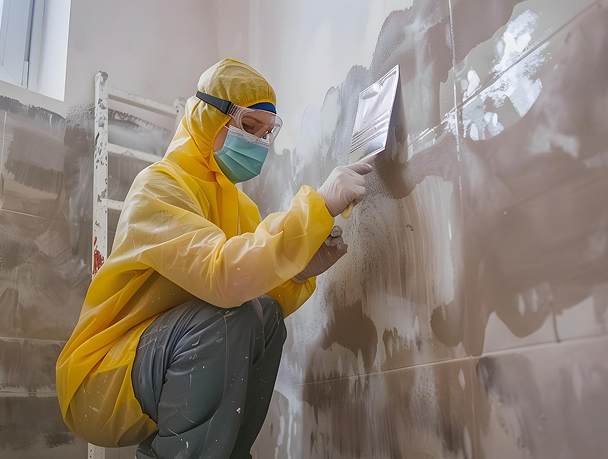
Worker inspecting mold

What Our MVOC Testing Services Include

We review odor concerns, assess moisture conditions, and collect air samples for laboratory analysis. Results are evaluated alongside inspection findings to help explain potential sources and recommend next steps.

Worker inspecting mold

MVOC Testing & Air Quality Assessment

  • Review of musty odors and property moisture history

  • Moisture detection in areas of concern

  • Air sampling for laboratory analysis of MVOCs

  • Detailed report with findings and recommended next steps

Schedule Estimate

How MVOC Testing Works

MVOC testing combines a property assessment with air sampling and laboratory analysis to investigate musty odors and potential microbial activity.

1

Initial Assessment

We review odor concerns, water damage history, and indoor conditions to determine where sampling may be useful.

2

Air Sample Collection

Air samples are collected from selected areas to test for compounds associated with mold and other microbial activity.

3

Laboratory Analysis

Samples are analyzed to identify and measure selected MVOCs. Results are reviewed alongside moisture conditions and inspection findings.

4

Results & Recommendations

We explain the findings and recommend next steps, which may include further mold testing, moisture control, or additional investigation.

What Happens Next

1

Schedule Review

2

Inspect Treated Areas

3

Test & Verify Results

4

Prevent Future Growth

What Our Customers Say

Based on verified Google Reviews

The job was done so well and efficiently. Brian was so accommodating and tentative. The response time was so quick. Would definitely recommend.
NoMold Solutions was very easy to work with and extremely informative. Brian went out of his way to inspect the entire building and answer our questions. I would absolutely use this company again in the future.
We discovered we needed mold remediation in the middle of an insulation project. NoMold Solutions came out promptly, provided a fair quote, and completed the work in a very short amount of time. The entire process was smooth and professional. I would definitely recommend their services.
I had Brian from NoMold Solutions come to my house for an inspection. I wasn’t feeling well and wanted to make sure it was not a mold issue. He ended up doing a total home purification treatment and I can say my house feels and smells brand new. I also feel so much better. Highly recommend this company!!
Very prompt response times and the best pricing among several local quotes. Highly recommended.

Frequently Asked Questions

What is mold clearance testing?

−

Clearance testing is performed after remediation to help confirm that visible mold has been removed and indoor mold levels are acceptable for normal use.

Is mold prevention different from mold removal?

+

Yes. Mold removal addresses the existing problem, while prevention focuses on moisture control, ventilation, monitoring, and maintenance to reduce the chance of mold returning.

When should I schedule clearance or prevention services?

+

These services are useful after remediation, after water damage, when a property has recurring moisture problems, or when you want confirmation that a treated area is safe and dry.

What helps prevent mold from coming back?

+

The most important steps are controlling humidity, fixing leaks, improving ventilation, drying damp areas quickly, and monitoring high-risk spaces such as basements, attics, crawlspaces, and bathrooms.

Protect Your Home From Returning Mold

Tell us what was treated, where moisture has been a problem, or what concerns you still have. We'll help you decide whether clearance testing or prevention support is the right next step.

Solve this simple question to help us prevent spam.

Certified & Accredited

EPA Certified NORMI Remediator RespirareLabs IICRC Certified