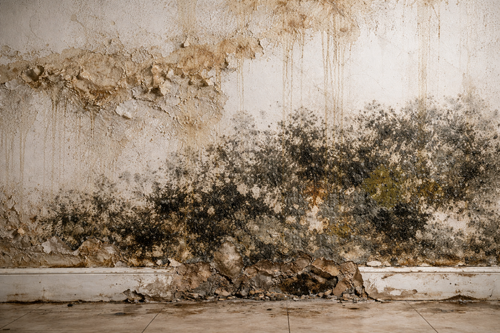
Dampness and Mold: Why They Go Hand-in-Hand
Before diving into the findings, let’s clarify why dampness is central to mold problems.
- Mold needs water: Without moisture, mold spores remain dormant. With water, they thrive.
- Common moisture sources: Roof leaks, plumbing leaks, poor ventilation, condensation on windows, and groundwater intrusion.
- Dampness = biological growth: Not only mold, but also bacteria, dust mites, and other microbes proliferate in damp conditions.
So when scientists study “damp housing,” they’re not only measuring mold, but the full ecosystem of microbes that thrive in moist environments.
What the Review Says: Evidence in Three Parts
This article synthesizes dozens of studies worldwide, making it one of the most comprehensive looks at mold and health.
1. Respiratory Health Risks Are Well-Established
The strongest evidence links dampness/mold exposure to:
- Asthma development and exacerbation
- Chronic coughing and wheezing
- Increased respiratory infections
Children are particularly vulnerable. Living in damp homes increases their chances of developing asthma by 30–50%, according to several studies.
2. Allergic and Immunological Effects Are Common
The review highlights a strong correlation between damp housing and:
- Allergic rhinitis (runny nose, itchy eyes)
- Eczema and skin irritation
- Sensitization to mold spores (higher IgE levels)
For people with genetic predispositions to allergies, dampness can tip the balance from tolerance to disease.
3. Mental Health Impacts Are Emerging
Surprisingly, damp housing is also linked to mental health issues like depression and anxiety. The review stresses that these may be due to both biological effects (poor air quality) and psychosocial stress (living in unhealthy housing conditions).
Why It Matters: Beyond the Musty Smell
Many people underestimate dampness as “just a cosmetic or comfort issue.” But this review shows it’s a public health problem.
- For children, damp housing means higher asthma rates and missed school days.
- For adults, it means chronic respiratory issues and greater healthcare costs.
- For society, it means lost productivity and widening health disparities (since low-income housing is disproportionately affected).
The takeaway: fixing dampness is a health intervention, not just home maintenance.
Case Studies: Science Meets Reality
Case 1: The School with Leaky Roofs
A middle school in Northern Europe reported rising asthma among students. Investigators found roof leaks causing hidden mold in ceiling tiles. After repairs and mold remediation, asthma-related absences dropped by nearly 40%.
Lesson: Building maintenance is a form of preventive healthcare.
Case 2: Low-Income Housing in the U.S.
Families living in subsidized apartments with water intrusion had higher emergency visits for asthma. After renovations (better ventilation, sealed leaks), ER visits decreased significantly.
Lesson: Housing policy and health policy overlap more than we realize.
Case 3: Mental Health and Moldy Homes
In a UK study, tenants in damp housing reported significantly higher rates of anxiety and depression. Researchers found that the stress of living in unsafe housing compounded the biological effects of poor air quality.
Lesson: Mold isn’t just physical; it affects mental well-being too.
Environmental Mycologist’s Perspective
This review resonates deeply with what I see in the field. Whenever I enter a damp building, I know the risks go beyond visible mold. Dampness itself is a biological driver.
Too often, mold is treated as an aesthetic issue: paint over the black spots and move on. But this review reinforces what scientists have been saying for years — dampness is a health hazard. And ignoring it means we’re allowing preventable illness to flourish.
Practical Guidance
For Homeowners and Tenants
- Act fast on leaks: Mold can start growing within 24–48 hours.
- Ventilate: Bathrooms, kitchens, and basements need airflow.
- Use dehumidifiers: Keep indoor humidity below 50%.
Inspect hidden areas: Mold often hides under carpets, behind wallpaper, and inside walls.
For Healthcare Providers
- Ask patients with chronic respiratory symptoms about their housing.
- Recognize mold-related asthma as an environmental trigger, not just a medical condition.
- Provide written advice for remediation rather than vague warnings.
For Policymakers
- Invest in housing repairs and damp-proofing as a public health measure.
- Update building codes to reduce damp risk in new construction.
- Fund research on cost savings from mold prevention.